As soon as Richard Roeper broke the news with his touching article that Chicago’s Lake Street Screening Room may soon be no more, now that the office building housing it will be converted into luxury apartments, my mind raced back twenty years to the day I first entered the hallowed space. I had just been hired as a film columnist for my college paper, The Columbia Chronicle, purely on the basis of reviews I submitted that I had been compulsively writing as a hobby. Attending my first-ever press screening was a privilege that felt utterly miraculous to me, and the last thing I wanted to do was make a bad impression. Upon walking into the startlingly intimate 48-seat theater, I decided to shyly sit in the last row, selecting the chair closest to the entrance. It wasn’t long before Chicago Tribune critic Mark Caro discreetly informed me that I was sitting in the chair reserved for Roger Ebert—the man whose annual review compilations I had devoured every day before grade school until their covers fell off. I was more than happy to move down a row, as Mark shook my hand and said, “Welcome to the fold.”
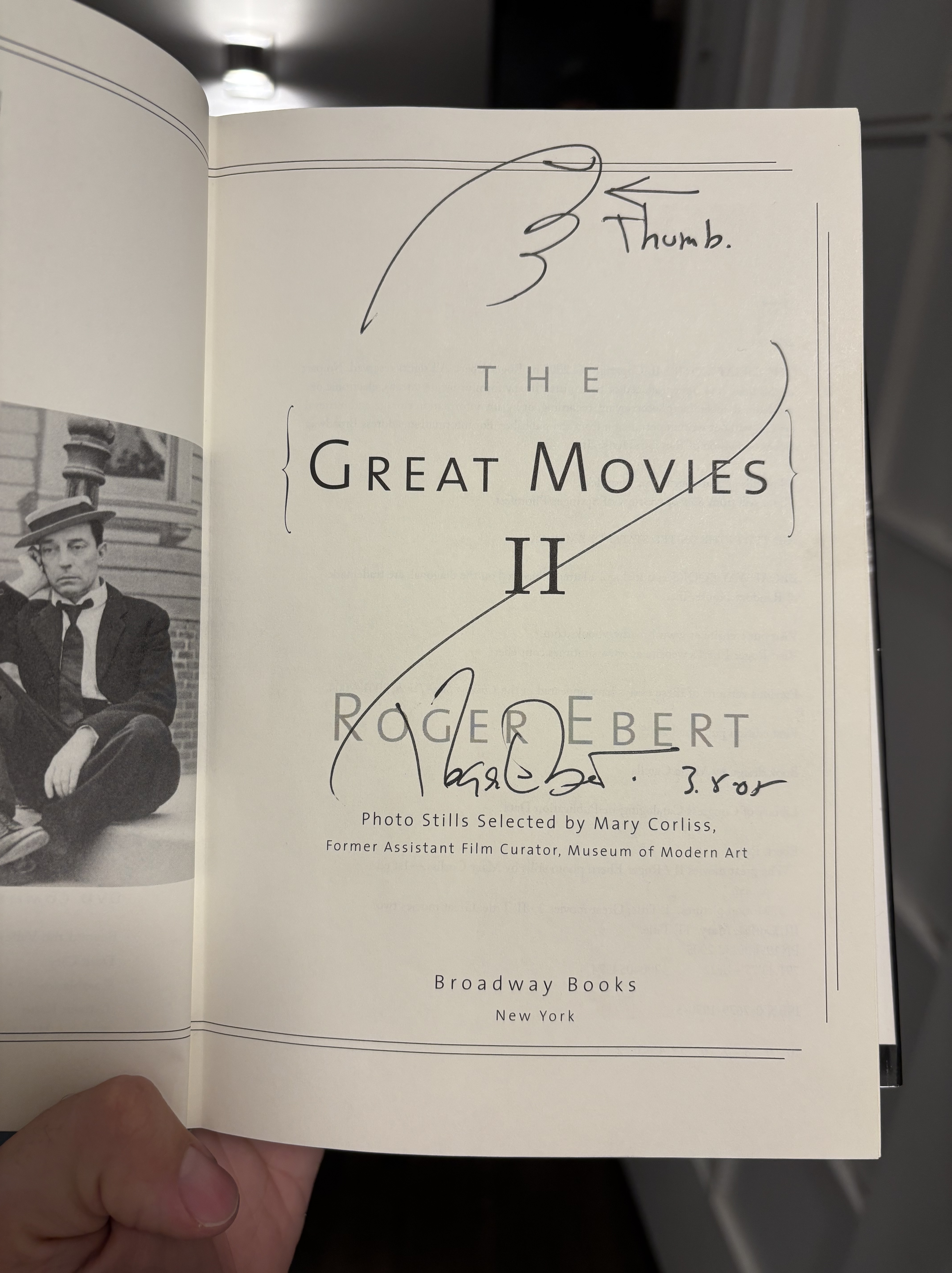
I had met Roger twice prior—once at a critic event honoring Robert Altman, and once at a book signing of his Great Movies series where I told him, “No need to write my name, all I want is a thumb,” leading him to speedily draw a squiggle that he labeled, “Thumb.” Neither setting allowed for an actual conversation, but at Lake Street, Roger welcomed them, even after having recently lost the ability to speak, following his cancer treatments. I noticed that most people avoided interacting with him, perhaps out of respect, but being the excited college kid I was, I spoke with him on multiple occasions. Roger’s eyes would brighten as he grabbed a notepad and recommended various films he had just caught on the festival circuit (he also told me that I had to read Cormac McCarthy’s Suttree).
I’ll never forget hearing him applaud the scene in “Juno,” his favorite film of 2007, where Allison Janney stands up for her pregnant daughter. Days later, as I was in the midst of an impassioned debate with a colleague about “Juno”—I loved it, he did not—I felt a tapping on my shoulder. I turned around and there was Roger giving me a thumbs up. The first film that screened at Lake Street following Roger’s passing in April of 2013 was the very last one he reviewed, Terrence Malick’s “To the Wonder,” of which he wrote, “Seeking perfection, we see what our dreams and hopes might look like. We realize they come as a gift through no power of our own, and if we lose them, isn’t that almost worse than never having had them in the first place?”
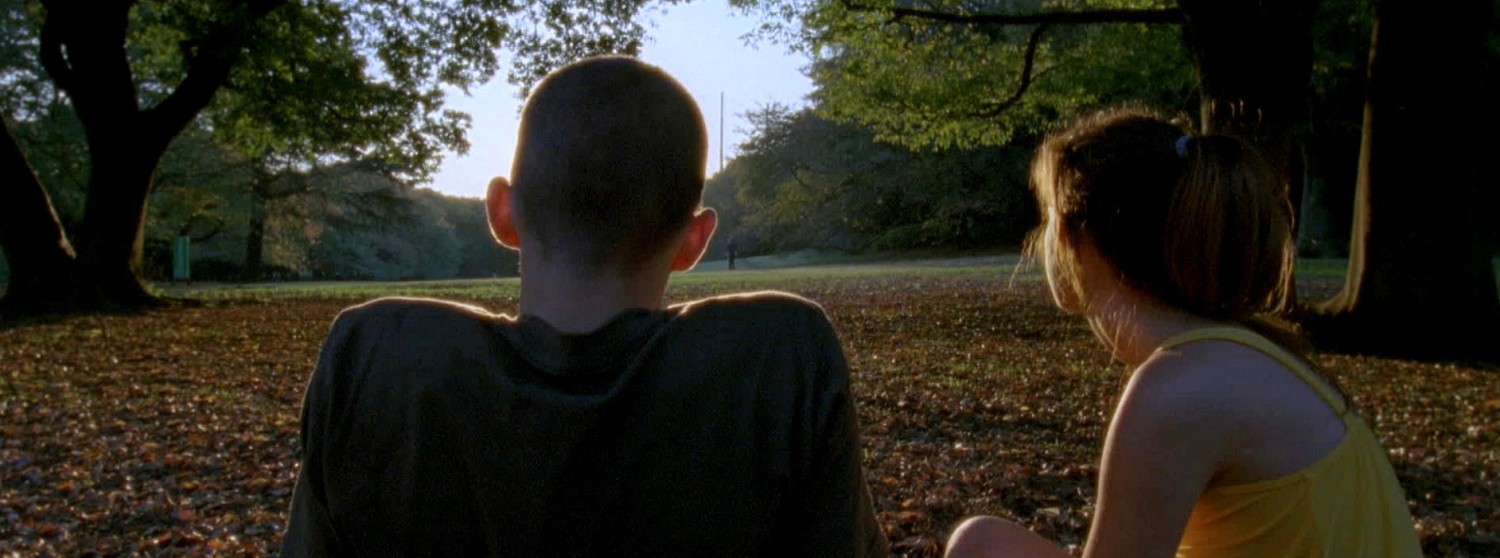
“The Pursuit of Happiness” was the first film I saw at Lake Street, and the print of it was so exclusive that credits had not yet been added to it. I honestly cannot remember the last film I saw there—since the majority of press screenings now take place at theater venues around the city—but none of them hold a candle to the picture and sound quality maintained for four decades by its longtime owner, Steve Kraus. He even had the audio from the film being screened pumped into the restroom so critics rushing through a bathroom break would barely miss a word of dialogue. I will forever cherish my memories there of discovering a treasure like “Eighth Grade” or “The Tree of Life” that instantly earned a spot on my list of all-time favorite films.
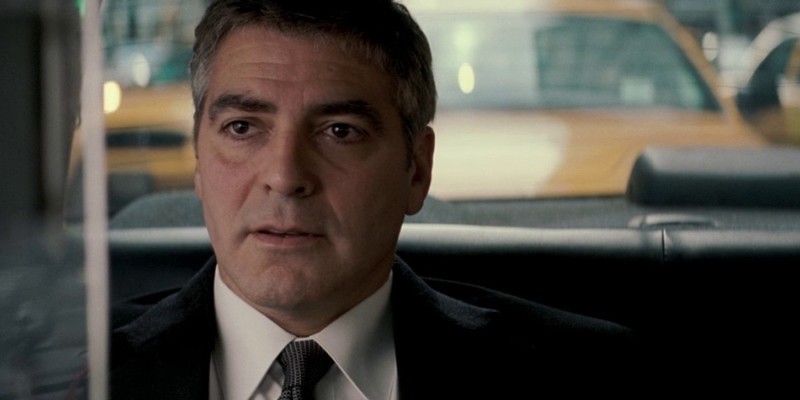
I’ll also never forget the handful of times I joined my fellow critics in spontaneously bursting into applause—such as when Tilda Swinton asks George Clooney in “Michael Clayton” if they could talk somewhere else, and he asks, “Where? My car?”, referring to the one she just had blown up. Another moment that united the room in roars of approval occurred at the end of Marielle Heller’s great debut feature, “The Diary of a Teenage Girl,” when Bel Powley mentally tells her blessedly ex-flame, “I’m better than you, you sonuvabitch.” Thank god the chairs in that room were comfortable, since we would sometimes have to stick around for a double bill—or in one case, an excruciatingly prolonged triple (“Zero Dark Thirty,” “Django Unchained” and “The Hobbit: Part 1” in headache-inducing 48 frames per second).
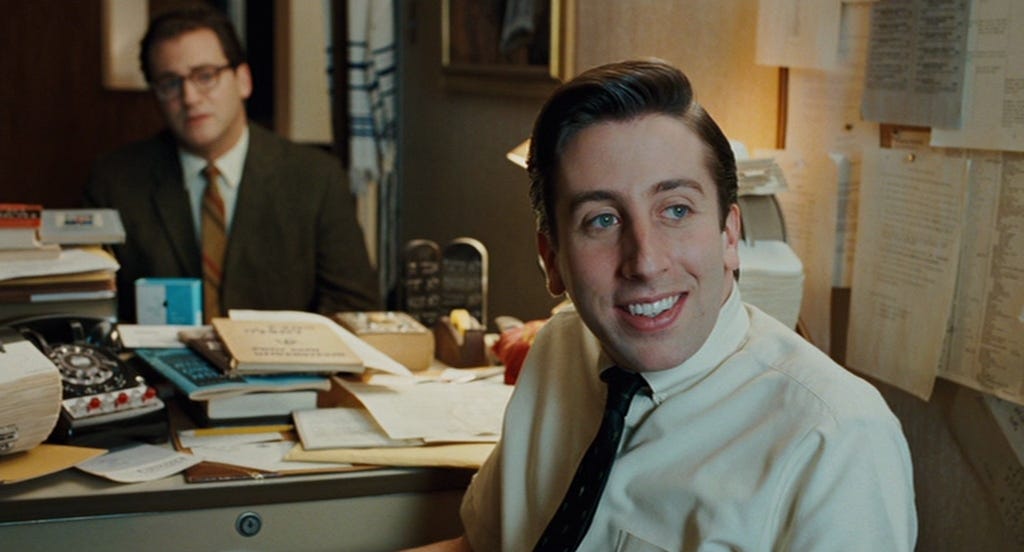
Though critics typically kept to themselves, honoring the unspoken law that they wouldn’t discuss what they had just seen until their reviews were published, the chatter prior to a screening could be lively. Jonathan Rosenbaum would always say hello when taking his usual seat on the aisle, while Peter Sobczynski would hurl such an irreverent cherry bomb of discourse into the room that you’d have to be dead not to cheerfully engage with it (Roger eventually dedicated one of his negative review compilations to Peter, a deserving honor for Chicago’s world champion ice breaker). I fondly recall Brian Tallerico saying, “It feels like Christmas!”, minutes before the new Coen Brothers film—“A Serious Man”—began. And after sitting through an especially graphic scene in “Enter the Void,” Dann Gire helpfully leaned toward me, noting, “And that’s how babies are made!” I still get emotional recalling how overjoyed my late friend Sergio Mims was when I brought him my copy of “Robinson Crusoe on Mars,” and told him he could keep it.
Every once in a while, a filmmaker would be present for their picture as it screened for press. In terms of pure showmanship, no one topped Crispin Glover, who preceded his self-distributed, disarmingly poignant oddity, “It Is Fine! EVERYTHING IS FINE.”, with a spastic live performance, reciting bizarre prose as an abstract slideshow ran on the screen. But the most mortifying memory of all—at least for yours truly—took place after a screening of “Rails & Ties,” one of many films I was assigned to see in order to later interview the director or actors.
As I strolled to the elevator, I saw a woman with red curly hair waiting for the next ride down to the main floor. I hadn’t seen her in the screening room before, so I decided to make small talk with her as we entered the elevator. I asked her what she thought of the film, and she turned the question back on me. “I thought the acting was strong, but honestly, I could predict everything that was going to happen long before it did,” I said off-handedly. “But I do think the director Alison Eastwood has potential.” With that, the elevator doors opened, and the woman said, “Thank you,” before hurrying out of the building.
Speed-walking back to my college paper’s office, I felt my heart starting to race as I thought, ‘Why did she say thank you??’ Since I only had a flip phone at the time, I couldn’t get on IMDb until I was in front of my computer—and as soon as I looked up Alison Eastwood, I found that the woman I was speaking to was indeed her incognito. For the next several days, I kept worrying that her dad Clint would start angrily banging on my apartment door, barking, “Do I feel lucky, Matt? Well, do ya, punk?” When I finally did interview Alison—now in her natural blonde hair—she graciously refrained from taking me to task. After all, why else would she attend a critic’s screening if not for obtaining an honest opinion?
Every one of my colleagues has as multitudinous of memories in this cinematic sanctuary as I do, and I look forward to reading all the ones that have been posted online thus far over the days ahead. Thank you, Steve, for keeping this beautiful space alive for so long. And thank you, Roger, for that unforgettable gesture of encouragement.

